


Best Food for Family Gathering Ideas
Updated: Aug 4
A family gathering usually starts the same way - someone asks what to serve, and suddenly everyone has an opinion. One person wants something filling, another wants something easy to share, and someone always hopes for food that feels special without turning the day into hours of cooking. That is exactly why the best food for family gathering moments tends to be food made for the table, not just the plate.
When people gather, the meal has to do more than taste good. It should be generous, easy to serve, and welcoming for different ages and appetites. It should also create a relaxed atmosphere where guests can reach, share, and eat comfortably instead of waiting for complicated courses or juggling too many separate dishes. For most families, the best choice is food that brings everyone in together and keeps the host out of the kitchen.
What makes the best food for family gathering meals?
The best family gathering food usually has four qualities. It is shareable, satisfying, flexible, and dependable. Shareable food naturally encourages connection because everyone eats from the same spread. Satisfying food matters because family events often last for hours, and light bites alone rarely carry the day. Flexibility helps when you have a mix of adults, kids, and relatives with different preferences. Dependability may be the most important of all, because the meal should arrive on time, stay enjoyable as people serve themselves, and feel just as good for the first guest as it does for the last.
This is why large-format meals often work better than individually plated dishes. A big rice platter, grilled meats, warm bread, salads, and a few sides create a complete table with less stress. People can build their own plate, go back for seconds, and eat at their own pace. That kind of setup feels generous without feeling formal.
Why Middle Eastern and Yemeni food works so well
Some cuisines are simply built for gathering, and Middle Eastern and Yemeni food is one of them. The flavors are rich and comforting, the portions are naturally generous, and many of the signature dishes are designed for sharing. Instead of serving separate meals to each guest, you can place a few substantial dishes in the center and let the table come alive on its own.
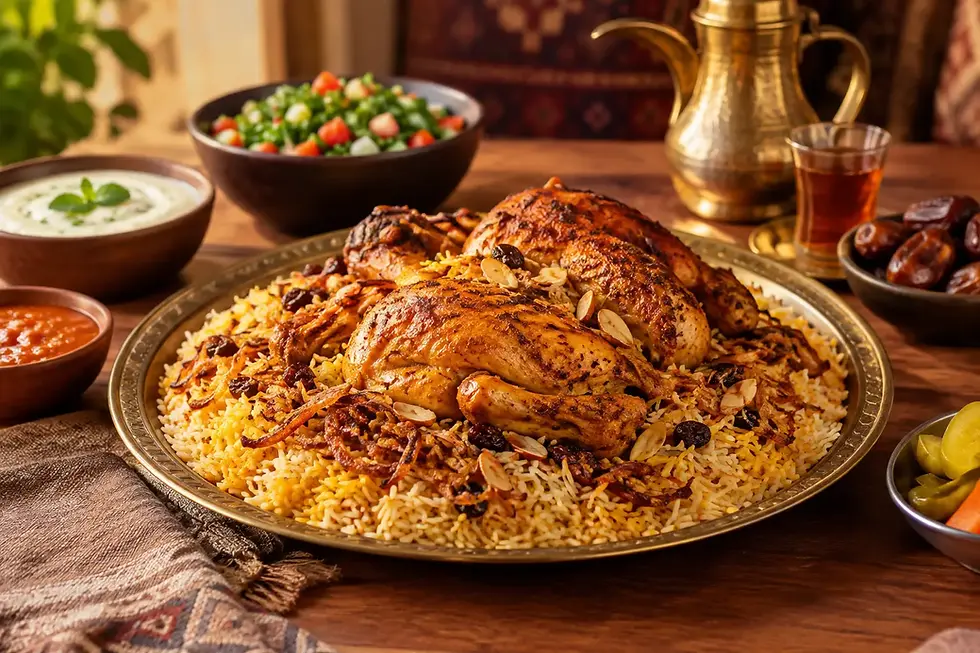
Rice platters are one of the strongest examples. They bring together seasoned rice, tender meat or chicken, and bold spices in a way that feels complete from the start. A platter like mandi or kabsa offers the kind of warmth and abundance that suits birthdays, weekend visits, holiday meals, and casual family reunions alike. It feels special, but it is also practical.
Another reason this style of food works is balance. You can pair hearty mains with fresh salad, yogurt-based sides, soup, bread, and grilled items. That keeps the meal from feeling too heavy while still making it satisfying enough for a full gathering. For hosts, that balance matters. You want guests to feel well fed, not overwhelmed.
The best dishes to serve when everyone is sharing
If you are choosing food for a family table, start with one or two centerpiece dishes. Rice platters are often the easiest choice because they feed a group well and hold their quality throughout the meal. Chicken mandi is a reliable option for mixed groups because it is flavorful, familiar, and approachable for children and adults alike. Lamb mandi or lamb haneeth feels more festive and is ideal when you want the meal to carry a stronger celebratory feel.
Mixed grill platters are another strong choice, especially for families who enjoy variety. They give guests different textures and flavors on one table, from juicy grilled chicken to kebabs and other roasted meats. This works especially well when not everyone wants the same main dish. Instead of forcing one decision, you let the table offer options.
Bread and dips help round out the spread without adding unnecessary complexity. Fresh bread, hummus, and other classic starters give guests something to enjoy right away while the main table settles. Soup can also be a smart addition, especially for evening gatherings or rainy-day meals when families want something extra comforting.
Sides matter more than many hosts expect. A fresh salad adds contrast to richer dishes, while sauces and yogurt-based accompaniments let each guest customize their plate. That small layer of choice makes the meal feel more personal and accommodating.
Best food for family gathering at home
Hosting at home changes the equation a little. The food still needs to be delicious and generous, but it also has to travel well, stay warm enough to enjoy, and require minimal effort once it arrives. This is where large shared meals become even more useful. You do not want to spend the first half of your own gathering reheating trays, assembling platters, or explaining where everything goes.
The best setup for home gatherings is usually simple. Choose one rice-based signature dish, add a grill item if your group is larger or more varied, and include a few easy sides. That gives you a complete meal with enough range to satisfy most guests. It also keeps the table organized instead of crowded with too many disconnected dishes.
For smaller family gatherings, one generous platter and two sides may be more than enough. For larger groups, it makes sense to mix chicken and lamb or combine a rice dish with grilled selections. The right balance depends on your guest list. If your family prefers mild, familiar flavors, lean into chicken and classic sides. If the gathering is more celebratory and your guests enjoy richer choices, lamb can make the meal feel more memorable.
When catering makes more sense than cooking
There is a point where home cooking stops feeling rewarding and starts feeling like logistics. If you are hosting a birthday lunch, an extended family dinner, or a holiday get-together, preparing everything yourself can pull your attention away from the people you invited. Food for a family gathering should support the moment, not take you out of it.
That is where catering or advance ordering becomes a practical advantage. You get consistency, portion planning, and a smoother experience overall. More importantly, you get to stay present. Guests remember the warmth of the table and the ease of the occasion. They rarely remember whether the host spent three hours washing pots.
For families who want restaurant-quality food without the pressure of kitchen prep, ordering from a dependable restaurant can be the difference between a stressful event and a genuinely enjoyable one. Hadramawt Kitchen is a strong fit for this kind of occasion because the menu naturally suits shared dining, the portions are generous, and the service options make it easier to host at home or gather in person with confidence.
Choosing the right amount of food
One of the biggest questions hosts ask is how much to order. The answer depends on the type of gathering, the age range of your guests, and whether the meal is the main event or part of a longer day. A lunch where everyone arrives hungry will need more substantial ordering than an evening gathering with desserts, tea, and snacks already planned.
As a general rule, shared platters work best when there is enough for seconds. Families eat at different speeds, and people often return to the table after talking, helping kids, or settling in. Running short creates tension that no host wants. Ordering a little extra is usually the safer choice, especially with food that keeps well and can be enjoyed later.
Variety also affects quantity. If you serve only one main dish, you will need more of it. If you offer two mains and several sides, guests naturally spread their appetite across the table. That can make portioning easier while still creating a generous impression.
Making the meal feel welcoming, not complicated
The best gatherings rarely feel overproduced. They feel easy, warm, and full. Good food plays a huge role in that. When the meal is arranged for sharing, guests settle in faster and the atmosphere becomes more relaxed. No one waits for elaborate plating, and no one feels awkward about serving themselves.
That is why the best food for family gathering occasions is usually food with presence and comfort. A table filled with fragrant rice, grilled meats, fresh bread, and familiar sides immediately tells guests they are welcome. It creates satisfaction before the first bite.
If you are planning your next family meal, think less about impressing everyone with complexity and more about serving food that brings people together naturally. Choose dishes that are generous, easy to share, and comforting enough to keep everyone at the table a little longer. That is often where the best family memories begin.


Comments