


How to Plan Group Dining Without the Stress
- Hadramawt Kitchen

- Aug 6
- 6 min read
A group meal can bring a family closer, turn a routine office lunch into a genuine connection, or give a birthday celebration the warmth it deserves. But when everyone is hungry, arriving at different times, and carrying different preferences, even a simple booking can become complicated. Knowing how to plan group dining means making a few thoughtful decisions early, so the focus stays where it should be: good food, easy conversation, and shared memories.
Start With the Purpose of the Gathering
Before choosing a restaurant or looking at menus, decide what the meal needs to accomplish. A relaxed weekend meal with extended family has different needs from a client lunch, a university society dinner, or a corporate appreciation event. The occasion influences the right setting, service pace, menu style, and level of privacy.
For a celebration, comfort and a welcoming atmosphere may matter most. For a business gathering, reliable timing, a calm table arrangement, and food that is easy to share can make the meal feel more professional. If guests are meeting for the first time, a communal dining experience often helps conversation flow naturally without making the occasion feel overly formal.
Set a realistic guest count at the beginning, then allow for a small number of changes. Ask for confirmations by a clear date rather than relying on a group chat where replies can be missed. A close estimate helps the restaurant prepare the right table layout and ensures there is enough food without unnecessary waste.
How to Plan Group Dining Around Your Guests
The best group dining plans consider the people at the table, not just the organizer's favorite dish. Think about the age range of your guests, whether children or elderly family members are attending, how much time everyone has, and any dietary needs that should be shared in advance.
HALAL-certified dining can provide reassurance for mixed groups, particularly when colleagues, visiting relatives, or guests from different backgrounds are coming together. It is equally useful to ask about allergies and ingredient concerns when confirming the reservation. Advance notice gives the kitchen and service team the opportunity to guide your menu choices responsibly.
Timing deserves more attention than it often receives. A large group arriving during a peak dining period may need more flexibility, while a workday lunch has a firmer schedule. Choose an arrival time that allows guests to settle in before food is served. If your group includes people traveling from several parts of the Klang Valley, select a location and time that reduce pressure for everyone.
It also helps to designate one point of contact. Rather than having multiple people call or message with updates, one organizer can communicate the final guest count, preferred dining time, menu requirements, and any celebration details. This keeps the plan clear for both the group and the restaurant team.
Choose a Menu Made for Sharing
Individual ordering gives every guest maximum choice, but it can slow service and make a large bill harder to manage. A pre-arranged shared menu is often the more comfortable option for groups, especially when the cuisine is naturally built around generous platters, rice dishes, grills, and accompaniments.
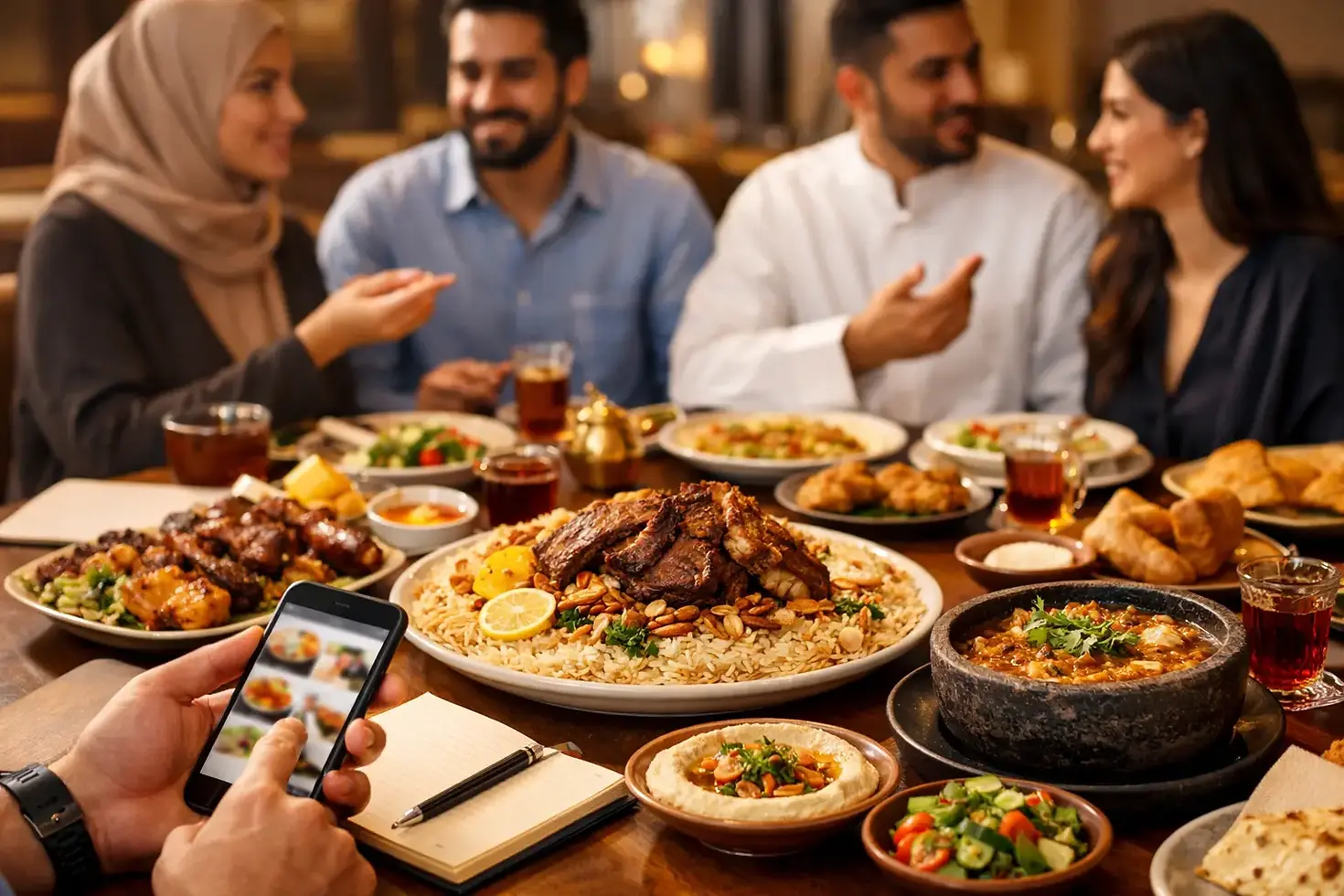
Yemeni and Middle Eastern food is especially well suited to the table-sharing experience. Fragrant Mandi or Kabsa rice can anchor the meal, while Haneeth, Madghout, kebabs, fresh grills, salads, sauces, and warm bread give guests variety. Add traditional desserts and Arabic beverages when the occasion calls for a fuller celebration.
The right approach depends on your group. For a small gathering of close friends, ordering several dishes to share can feel spontaneous and enjoyable. For a team of 20 or a formal event, a planned selection usually works better because portions, service timing, and budget expectations are easier to manage.
When selecting food, build variety without overcomplicating the table. A balanced group order generally includes a rice-based centerpiece, a combination of meat or grilled choices, lighter sides, and enough shared items for guests to sample. Ask the restaurant for guidance on portion sizes based on the number of adults and children attending. Experienced teams can recommend combinations that feel generous while remaining practical.
Make the Reservation Early and Clearly
For groups, a reservation is more than reserving seats. It is an opportunity to help the restaurant prepare the right experience. Booking early is particularly valuable for weekend lunches, evenings, public holidays, Ramadan gatherings, and dates when private celebrations are common.
When you contact the restaurant, share the details that affect service most:
The expected number of guests and the date for final confirmation
Your preferred date, arrival time, and expected dining duration
Whether the meal is a family gathering, corporate function, birthday, or private event
Dietary requirements, children attending, or guests who may need easier access
Whether you would like a set menu, shared platters, individual orders, or catering
A simple conversation ahead of time prevents avoidable confusion on the day. If you are organizing a larger corporate function or private event, ask whether the restaurant can support a customized menu and service arrangement. The ideal setup may be different for a networking lunch than for a festive dinner where guests are expected to stay longer.
Plan the Budget Without Making the Meal Feel Transactional
A clear budget is considerate, not restrictive. Guests are more comfortable when they know whether the host is arranging a fixed menu, when they are expected to pay individually, or when a company is covering the meal. This is especially useful for professional gatherings, where unclear expectations can create awkward moments at the end of the meal.
For hosted events, a shared menu can offer better control because the organizer knows what is being served before guests arrive. For casual groups splitting the bill, consider agreeing on the approach beforehand. Individual ordering may be appropriate for a small group, while shared dishes can be easier to divide fairly for a larger table.
Do not select a menu based only on the main dishes. Factor in beverages, desserts, service needs, and any additional arrangements that matter to the occasion. If you are planning catering rather than dining in, clarify delivery timing, setup requirements, serving utensils, and the location's access rules before the event day.
Give the Restaurant Room to Deliver Great Service
A smooth group meal is a partnership. Guests can help by arriving close to the agreed time, keeping the organizer informed about significant changes, and communicating requests politely and early. Restaurants can serve large parties more effectively when they have accurate information and enough preparation time.
Avoid last-minute changes unless they are necessary. Adding a few guests may be manageable, but major increases can affect seating and food preparation. If several attendees are running late, let the restaurant know. A quick update allows the team to adjust the service flow and keep the meal in good condition for everyone.
For hosts, it is worth arriving a little early to welcome guests and confirm the plan with the service team. That small step lets you handle practical details before the rest of the group arrives. Once everyone is seated, your role can shift from organizer to host.
Match the Format to the Occasion
Not every group needs the same type of dining experience. A family reunion may call for a long, unhurried meal with large sharing platters. A corporate lunch may benefit from a simpler menu that can be served efficiently. For an off-site meeting, delivery or catered food can be the right answer when travel time or venue logistics make restaurant dining difficult.
Hadramawt Kitchen has served Malaysia since 2012 with authentic Yemeni and Middle Eastern dishes, HALAL-certified quality, generous portions, and warm Arabian hospitality. For groups in Shah Alam, Bangsar, and across the Klang Valley, choosing a restaurant with experience in reservations, private events, corporate functions, and catering can make planning considerably easier.
The format should also reflect the energy you want to create. Shared dishes encourage guests to interact and try something new together. Individual meals may suit a short business schedule or an event where guests have varied appetites. Neither option is automatically better. The best choice is the one that makes your guests feel considered.
A Meal People Will Remember for the Right Reasons
Great group dining is rarely about complicated planning. It comes from clear communication, enough food, a suitable setting, and a host who has made guests feel welcome before they sit down. Give yourself time to book, ask for menu advice, and share the key details early.
Then let the table do what it does best: bring people together over generous food and sincere hospitality.


Comments