


Buffet Versus Platter Catering for Your Event

A room can be beautifully decorated, a guest list can be perfectly planned, and still the event may feel rushed if the food service does not suit the occasion. When choosing buffet versus platter catering, the real question is not which option is better overall. It is which one lets your guests enjoy generous, authentic food in the most comfortable way for your venue, schedule, and gathering.
For Middle Eastern and Yemeni cuisine, both formats can create a memorable table. Fragrant Mandi rice, tender Haneeth, fresh grills, kebabs, dips, salads, desserts, and Arabic beverages all deserve a serving style that protects their quality and welcomes guests to enjoy them fully.
Buffet Versus Platter Catering: The Main Difference
A buffet presents food on a dedicated serving table or station. Guests move through the selection, choose what they would like, and return to their seats. It is a natural choice for larger gatherings where variety matters and people are happy to mingle.
Platter catering brings prepared dishes directly to each table, meeting room, or group. Food is arranged for sharing, often in generous central portions that encourage conversation around the table. Depending on the event, platters can also be set out as ready-to-serve spreads for smaller groups.
Both can include the same high-quality menu. The difference is in the guest experience, how food moves through the room, and how much flexibility you need during service.
When a Buffet Is the Better Fit
A buffet is often the strongest option for corporate functions, open-house events, university gatherings, wedding receptions, and celebrations with a broad mix of guests. It gives everyone more control over their plate, especially when the menu includes several rice dishes, grills, sides, and desserts.
This format works especially well when guests arrive over a period of time. At a company appreciation lunch, for example, attendees may come from different meetings. A buffet allows them to eat when they are ready without holding the entire room to one serving schedule.
Buffets also make menu variety easy to appreciate. Guests can pair aromatic Kabsa or Mandi with grilled chicken, lamb, fresh salads, sauces, and traditional sweets according to their preferences. For guests who are new to Yemeni and Arabic cuisine, seeing the full selection can make the experience more inviting.
There are practical considerations. A buffet needs enough space for a serving line and enough room for guests to move comfortably. For a large guest count, organizers should also consider the timing of the first service wave. A well-organized buffet layout helps keep lines moving and gives every dish the attention it deserves.
For formal programs, buffet timing matters. If there are speeches, awards, or a tightly scheduled presentation, it may be best to serve before the program begins or during a planned break. This avoids guests leaving their seats at key moments.
Buffets suit events that need choice and movement
Choose a buffet when your priority is variety, flexible dining times, and a lively social atmosphere. It is particularly useful when you expect guests to have different appetites or when the event is large enough that individual table service would slow the schedule.
When Platter Catering Creates a Better Experience
Platter catering is ideal when the meal itself should feel personal, relaxed, and shared. It suits family celebrations, board meetings, private dinners, small team lunches, and seated occasions where guests are expected to remain at their tables.
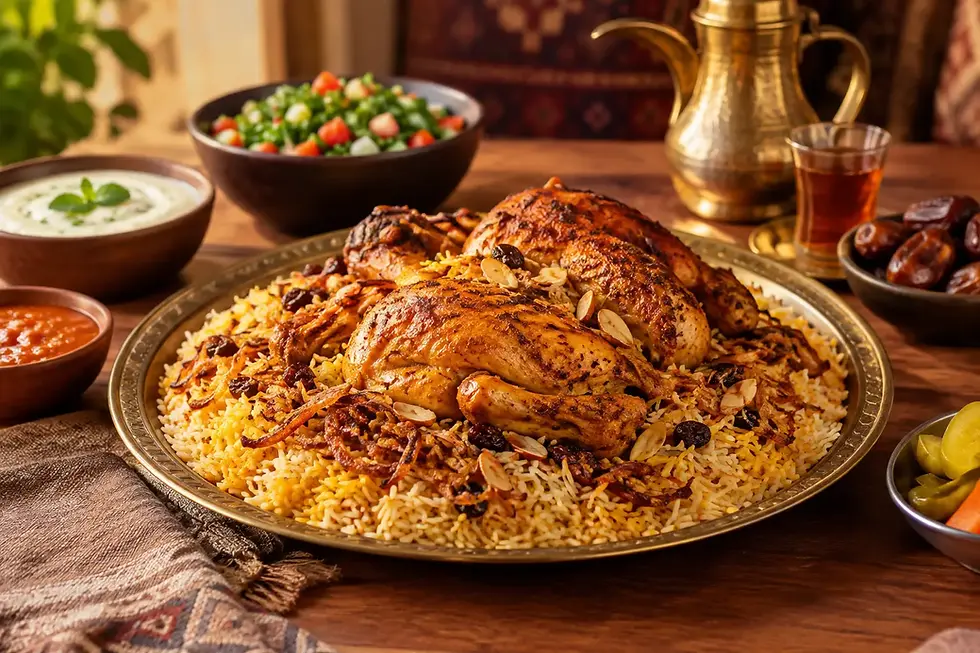
Shared platters have a natural connection to Arabian hospitality. A generous centerpiece of rice and tender meat or grilled selections invites people to serve one another, talk, and enjoy the meal together. The presentation feels abundant without requiring each guest to step away from the table.
For a business meeting, platter service can be particularly practical. The group can begin eating as soon as the food arrives, then continue the conversation without repeated trips to a buffet station. It is also a thoughtful choice for venues with limited floor space, such as a meeting room, private residence, or compact event hall.
Platter catering does require careful planning around group size. A table of eight may share comfortably from several platters, while a group of 40 may need coordinated placement so every guest can reach the food easily. Your caterer should help determine appropriate portions based on the menu, number of guests, and whether the meal is the main focus of the event.
Platters suit events built around connection
Choose platters when you want food to arrive at the table ready to share, when space is limited, or when a seated setting is central to the occasion. This format can feel especially welcoming for family-style celebrations and intimate professional gatherings.
Consider the Menu Before Choosing a Service Style
The best format often becomes clearer once you know what you want to serve. Rice-based Yemeni favorites such as Mandi, Kabsa, Madghout, and Maqlubah are excellent in both buffets and shared platters. On a buffet, guests can select their preferred portion and add sides. On the table, these dishes become a generous focal point for the group.
Fresh grills, kebabs, and shawarma wraps are usually easy to enjoy from a buffet because guests can choose their preferred items. For platters, mixed grills offer an appealing shared option, especially when paired with bread, salads, sauces, and rice.
Consider how you want guests to encounter more distinctive dishes as well. Fahsa, with its rich, comforting character, can be a welcome addition for groups interested in a traditional Yemeni experience. Desserts and Arabic beverages may be served at the table or set up as a separate station, depending on the pace of the event.
The goal is not simply to offer more dishes. It is to create a menu where each item stays enjoyable from the first guest served to the last.
Guest Count, Venue, and Timing Matter Most
There is no fixed guest number that automatically means buffet or platter. A buffet can work beautifully for a modest group with a spacious venue, while platters can serve a larger gathering if guests are seated at well-planned tables. The decision comes down to flow.
Before confirming your catering format, think through four practical details:
How many guests will attend, and will they arrive at the same time?
Is the venue arranged for standing, mingling, or seated dining?
How much time is available for the meal?
Do you need broad menu choice or a more curated shared feast?
If the event includes guests from different departments, families, or cultures, a buffet can offer reassuring flexibility. If it brings together one close group around a meal, platters can make the food feel more intentional and communal.
Also consider the service environment. Outdoor events, offices, homes, hotel meeting rooms, and banquet halls each have different access, table, and setup needs. Sharing venue details early helps the catering team recommend a format that feels organized from arrival through the final course.
A Combined Approach Can Work Beautifully
You do not always have to choose only one format. For some weddings, corporate dinners, and Ramadan gatherings, a combined setup is the most practical answer. Main dishes can be served as shared platters at tables, while salads, desserts, and beverages are offered from a separate station. This keeps the meal communal while giving guests room to explore.
Another effective approach is a buffet for the main meal and plated or table-served desserts afterward. The change in pace can make the occasion feel more polished, especially for formal celebrations.
Hadramawt Kitchen® provides HALAL-certified catering shaped around authentic Yemeni and Middle Eastern flavors, generous portions, and warm Arabian hospitality. For events across the Klang Valley, the right recommendation begins with a clear understanding of your guest count, menu preferences, venue layout, and service timing.
A well-chosen catering style lets guests focus on what they came for: good conversation, a welcoming atmosphere, and food worth gathering around. Share your event details early, and choose the format that gives every guest a comfortable place at the table.


Comments